

skip page navigationOregon State University

College of Veterinary Medicine

Large Animal Services

Lois Bates Acheson Veterinary Teaching Hospital
Large Animal Services

equine treatment

Return to Contents

Introduction

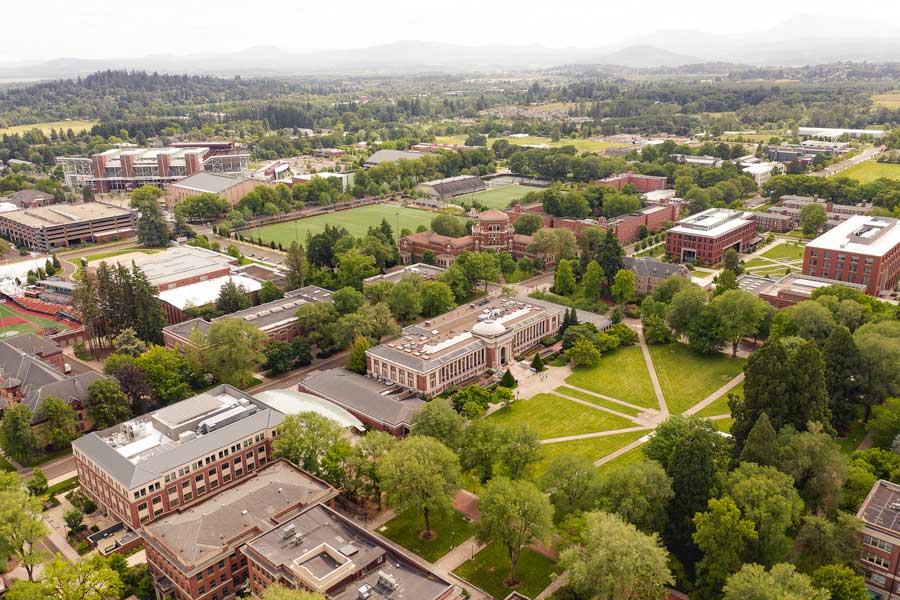
The Veterinary Teaching Hospital opened in fall 1981. It is located on 30th Street south of Washington Way and north of Western Boulevard, across the street from Gill Coliseum and Reser Stadium. Our primary missions are those of teaching and service. We provide education and training to veterinary students and provide health care for large animals through our primary care Rural Veterinary Practice group in the Corvallis and Benton County area and referral care for large animals from Oregon, western Washington, and northern California. The primary goals of the Veterinary Teaching Hospital are:

  1. to teach veterinary students in the professional curriculum;
  2. to provide service to large animal owners in the Pacific Northwest, principally Oregon;
  3. to serve as a referral center for veterinary practitioners;
  4. to provide emergency care to livestock owners;
  5. to provide telephone consultation to practitioners;
  6. to provide an intellectual and academic atmosphere that is conducive to improving the state of the art of veterinary medicine

The Veterinary Teaching Hospital is a large animal referral hospital and as such its case load is primarily animals with problems which require a second opinion, require more extensive treatment than the referring veterinarian can give or the treatment requires use of specialized equipment the cost of which is outside of the realm of the referring veterinarian. Additionally, the Veterinary Teaching Hospital has an ambulatory practice (Rural Veterinary Practice) that operates in the Corvallis and Benton County area. Its caseload is much the same as any other large animal practitioner in the state but is primarily dairy and equine. The Veterinary Teaching Hospital is organized into academic/service sections and includes specialists in Anesthesiology, Medicine, Nutrition, Radiology, Rural Veterinary Practice, Surgery, and Theriogenology. Each section is organized by specialty rather than species. Faculty in each section thus apply their specialty service and instruction to a variety of different animal species. This obviously creates an interaction between sections as consultations and shared clinical responsibilities on individual animal cases are common as is consultation with units outside of the Veterinary Teaching Hospital, most commonly faculty of the Veterinary Diagnostic Laboratory.

Return to Contents

Physical Facilities and Equipment

The Veterinary Teaching Hospital is fully equipped for equine, food animal, and some exotic hoofed species, primarily llamas and alpacas. The initial design and installation of stalls, alleys, chutes, and other restraining devices were planned so that restraint of patients is easily performed from the fence around the building to movement of the animals within the Hospital. There are 23 equine stalls, 20 of which are for hospitalized patients. The other three are used as holding stalls for outpatients, animals that are presented for diagnosis and recommendations for one problem or another with the intention of the horse not remaining in the hospital overnight. There are two isolation stalls and two intensive care stalls. The isolation units can only be entered from outside the building and have no access from inside. The intensive care stalls are equipped with separate thermostatic control so that ambient temperature can be adjusted as needed. The intensive care stalls also have a camera for closed circuit observation of the animal when needed. Other patient stalls also have the capability for closed circuit observation. There are 13 food animal stalls, five of which have been modified for llamas, four stalls for adult bulls and 12 stalls for small food animals. The adult food animal stalls have head gates and restraining gates to facilitate handling the animals. A chute designed for llamas is located in another food animal treatment area. There is one treatment/exam area for horses and another treatment/exam area for theriogenology. There is also one treatment/exam room for cattle that is equipped with a system of chutes and gates that allow us to maneuver fractious cattle into a head gate or on to a surgery table. Adult bulls can also be directed to a chute adjacent to the semen evaluation laboratory for breeding soundness examinations. There are four surgery rooms, two with adjacent induction/recovery stalls. These rooms are utilized for major surgical procedures. A third surgery room has been designated as a minor surgery room and is used for castrations, cast changes, etc. The fourth room is used for surgery on awake cattle and for minor procedures on anesthetized animals. The induction/recovery stalls have a nonslip floor and padded walls to assist the horses in their attempts to rise. Patient stalls, the large animal radiology areas, surgery rooms, and treatment/examination areas of the hospital also have nonslip floors. The surgery area is equipped for general and orthopedic surgical procedures including arthroscopy, laparoscopy, carbon dioxide and diode lasers and a full range of implants for long bone fracture repair. The two radiology suites, one for adult large animals and one for pediatric large animals, are fully equipped. One film processor serves both suites. A portable machine is used for radiographing extremities. A smaller portable machine is used by the Rural Veterinary Practice group at the owner's farm or ranch. We have three ultrasound units two of which are small enough for on-farm use. Nuclear scintigraphy is available. A fluoroscopic unit is also available for specialized procedures. Both the medicine and surgery sections use the videoendoscope for various upper airway examinations and esophageal and gastric endoscopy. A bovine floatation system (Aqua-Cow-Rise®) for treating cattle recumbent because of musculoskeletal disorders is available. Diagnostic capabilities in neurology include electromyography, nerve conduction velocities, muscle histochemistries, radiology (including myelography), and CSF analysis. EEGs are not available at this time.

Return to Contents

camelid

Referral Policy

The Oregon State University Veterinary Teaching Hospital provides veterinary services for large animals only. Consultations on small animals species are available in some of the specialties. The hospital operates on an appointment basis. It is important for each admission to be a referral, even though we may have seen the animal previously. Either veterinarians or clients may call to make an appointment. It is suggested that: 1) a referral form be sent with the client at the time of the appointment, or 2) if you have a FAX machine available to you it can be sent to us at 541-737-8651, or 3) that the veterinarian telephone the Veterinary Teaching Hospital prior to the appointment time, in accordance with the American Veterinary Medical Association Guidelines for Referrals, 1980. To avoid confusion and miscommunication, adherence to this request is desirable; without this form or prior telephone contact regarding the case, the case may not be considered a referral. If your supply of referral forms has been exhausted, please contact the Veterinary Teaching Hospital so that more may be sent to your practice.

Cases will be assigned to a clinician in the most appropriate specialty as schedules allow. It is also important to note that a case may be transferred to another clinician within the Veterinary Teaching Hospital in order to provide the best possible care for an animal. It is also possible for several clinicians to be involved in the same case, but a primary, or attending clinician will be designated. It is also important to note, as a teaching hospital, veterinary students will be actively involved in each case.

Return to Contents

Referring Veterinarian Communication Policy

Communication between the Veterinary Teaching Hospital clinical faculty and referring veterinarians is extremely important. Every effort is made to contact referring veterinarians by telephone within 24 hours after patients have been admitted (within 48 hours if admission occurred over a weekend), notifying them that the animals are being treated and identifying the clinician in charge of each case.

When a patient is discharged, the clinician sends a discharge form with diagnosis, treatments given, and treatment instructions home with the client, if applicable. A copy of the discharge form followed by a referral letter or report discussing the treatment, diagnosis, and prognosis of each case is sent to the referring veterinarian. Should there be questions concerning the case, the referring veterinarian should contact the hospital during business hours. As a referring veterinarian, you may be contacted from time to time by telephone by the clinician in charge of your referral to discuss different aspects of the case.

Return to Contents

Telephone Communication

The Veterinary Teaching Hospital reception desk is staffed from 8:00 a.m. until 5:00 p.m., Monday through Friday. Please contact our receptionist at 541-737-2858 to make an appointment or to contact one of the clinicians.

Clinicians from the various service areas will be available at different times during the day for consultations with veterinarians and/or their clients. If the clinician is not immediately available, a message may be left for the clinician to return your call.

Return to Contents

Financial Responsibility

Clients should be informed that the Veterinary Teaching Hospital must charge for their services. Clients should also be prepared to pre-pay half of the estimated bill when animals are admitted. The remainder is due when the animal is discharged unless payment arrangements are made at the time of admission on a "Charge Agreement" form. Fee estimates may be obtained by calling the reception desk. The hospital will accept personal checks as well as both MasterCard and Visa for payment of fees.

Return to Contents

Clinical Faculty

bovine

Anesthesiology

Thomas W. Riebold DVM (ILL 72)
Diplomate, American College of Veterinary Anesthesiologists
Professor
541-737-2858 (reception)
541-737-6951 (voice mail)
541-737-8651 (fax)
Thomas.Riebold@oregonstate.edu
Special interests are anesthesia equipment and related areas, use of alpha-2 agents and opiates/opioids for regional analgesia.

Return to Contents

Internal Medicine

Christopher Cebra VMD (UP 91), MA (UP 86), MS (CSU 95)
Diplomate, American College of Veterinary Internal Medicine
Professor
541-737-2858 (reception)
541-737-5568 (voice mail)
541-737-8651 (fax)
Christopher.Cebra@oregonstate.edu
Special interests are gastrointestinal disorders of ruminants and camelids, production-related disorders of cattle, neonatology, non-traditional (pseudo) ruminant species.

Erica McKenzie BSc, BVMS, PhD
Diplomate, American College of Veterinary Internal Medicine
Assistant Professor Large Animal Medicine
541-737-2858 (reception)
541-737-8651 (fax)
Erica.Mckenzie@oregonstate.edu
Special interests: muscle disease, nutrition, exercise physiology, ultrasonography

Erwin G. Pearson DVM (COR 58), MS (ORS 79)
Diplomate, American College of Veterinary Internal Medicine
Professor Emeritus
541-737-2858 (reception)
541-737-6950 (voice mail)
541-737-8651 (fax)
Erwin.Pearson@oregonstate.edu
Special interests are diseases of the liver, chronic airway disease of the equine, gastroenterology in all species, and skin disease.

John W. Schlipf Jr DVM (CSU 85), MS (CSU 93)
Diplomate, American College of Veterinary Internal Medicine
Assistant Professor
541-737-2858 (reception)
541-737-6962 (voice mail)
541-737-8651 (fax)
John.Schlipf@oregonstate.edu
Special interests are equine neurology, neonatology, and pulmonary diseases.

Jaime Hustace DVM (ORS 05)
Resident
541-737-2858 (reception)
541-737-4836 (voice mail)
541-737-8651 (fax)
Jaime.Hustace@oregonstate.edu

Katelyn Romeo DVM (COR 06)
Resident
541-737-2858 (reception)
541-737-8651 (fax)
Katelyn.Romeo@oregonstate.edu


Return to Contents

Diagnostic Imaging

equine surgery


Return to Contents

Surgery

Michael J. Huber DVM (CAL 80), MS (ORS 91)
Diplomate, American College of Veterinary Surgeons
Associate Professor
541-737-2858 (reception)
541-737-6947 (voice mail)
541-737-8651 (fax)
Michael.Huber@oregonstate.edu
Special interests are equine and food animal orthopedic and urogenital surgery, arthroscopy, laparoscopy, general llama surgery.

Jill E. Parker VMD (UP 83)
Diplomate, American College of Veterinary Surgeons
Assistant Professor
541-737-2858 (reception)
541-737-6949 (voice mail)
541-737-8651 (fax)
Jill.Parker@oregonstate.edu
Special interests are general equine and food animal surgery, and equine lameness. Research interests include adhesion formation and gastrointestinal surgery.

Stacy A. Semevolos DVM (ILL 94), MS (COR 00)
Diplomate, American College of Veterinary Surgeons
Assistant Professor
541-737-2858 (reception)
541-737-7666 (voice mail)
541-737-8651 (fax)
Stacy.Semevolos@oregonstate.edu
Special interests are large animal general and orthopedic surgery, equine osteochondrosis, articular cartilage development.

Katja Duesterdieck-Zellmer Dr.med.vet. (HAN 99), MS, PhD, DACVS
Large Animal Surgeon
541-737-2858 (reception)
541-737-8651 (fax)
Katja.Zellmer@oregonstate.edu

Nellie Driscoll DVM (OSU 05)
Resident
541-737-2858 (reception)
541-737-8651 (fax)
Nellie.Driscoll@oregonstate.edu

Tara Riddick DVM (MIS 06)
541-737-2858 (reception)
541-737-8651 (fax)
Tara.Riddick@oregonstate.edu

Return to Contents

Theriogenology

Russell O. Crisman DVM (PUR 70), PhD (GA 79)
Diplomate, American College of Theriogenologists
Associate Professor
541-737-2858 (reception)
541-737-6944 (voice mail)
541-737-8651 (fax)
Russell.Crisman@oregonstate.edu
Special interests are infertility in all species.

Charles T. Estill VMD (UP 76), PhD (NCSU 94)
Diplomate, American College of Theriogenologists
Associate Professor
541-737-2858 (reception)
541-737-7667 (voice mail)
541-737-8651 (fax)
Charles.Estill@oregonstate.edu
Special interests are corpus luteum physiology, manipulation of the estrous cycle, nutritional influences on reproduction, dairy production medicine.

Michelle A. Kutzler DVM (WSU 93), PhD (COR 02)
Diplomate, American College of Theriogenologists
Assistant Professor
541-737-2858 (reception)
541-737-6952 (voice mail)
541-737-8651 (fax)
Michelle.Kutzler@oregonstate.edu
Special interests are placental and fetal vascular physiology and small animal theriogenology.

Hernan Montilla DVM
Resident
541-737-2858 (reception)
541-737-8651 (fax)
Hernan.Montilla@oregonstate.edu

Return to Contents

Rural Veterinary Practice

Russell O. Crisman DVM (PUR 70), PhD (GA 79)
Diplomate, American College of Theriogenologists
Associate Professor
541-737-2858 (reception)
541-737-6944 (voice mail)
541-737-8651 (fax)
Russell.Crisman@oregonstate.edu
Special interests are infertility in all species.

Charles T. Estill VMD (UP 76), PhD (NCSU 94)
Diplomate, American College of Theriogenologists
Associate Professor
541-737-2858 (reception)
541-737-7667 (voice mail)
541-737-8651 (fax)
Charles.Estill@oregonstate.edu
Special interests are corpus luteum physiology, manipulation of the estrous cycle, nutritional influences on reproduction, dairy production medicine.

Michelle A. Kutzler DVM (WSU 93), PhD (COR 02)
Diplomate, American College of Theriogenologists
Assistant Professor
541-737-2858 (reception)
541-737-6952 (voice mail)
541-737-8651 (fax)
Michelle.Kutzler@oregonstate.edu
Special interests are placental and fetal vascular physiology and small animal theriogenology.

Jacob A. Mecham DVM (TEX 04)
Assistant Professor
541-737-2858 (reception)
541-231-2277 (voice mail)
541-737-8651 (fax)
Jacob.Mecham@oregonstate.edu
Special interests are hands-on teaching combined with practicalities of field service work.

Aurora Villarroel DVM (ULP 96), MPVM (UCD 02), PhD (CSU 07)
Diplomate, American College of Veterinary Preventive Medicine
541-737-2858 (reception)
541-737-8651 (fax)
Aurora.Villarroel@oregonstate.edu
Special interests are production medicine and epidemiology.

Return to Contents

Clinical Fellows

General Information

The clinical fellowship program was instituted in 1990 to afford individuals not wishing to begin a residency an opportunity to obtain advanced clinical training or individuals in practice situations to take sabbatical leave in an academic environment. Clinical fellows rotate through the various disciplines in the hospital and do not declare a specialty. The appointment is of one year duration. The clinical fellows will often receive the emergency cases from those of you who refer cases out of business hours. Clinical fellows will provide care for these cases and will receive support from faculty clinicians in the appropriate discipline. These cases will be transferred to the appropriate discipline no later than the next business day although the transfer may occur before then when deemed necessary.

Megan McCracken DVM
541-737-2858 (reception)
541-737-8651 (fax)
Megan.Mccracken@oregonstate.edu